
Working Capital vs. Equipment Financing: Which Is Better For Your Growing Canadian Company?

Growing a business in Canada is an exciting ride, but let’s be honest, it’s also expensive. Whether you’re a contractor in Calgary needing a new excavator or a retail shop in Toronto trying to stock up for a massive holiday season, you’ve probably realized that cash flow doesn't always keep up with your ambitions.
When you reach that point where you need an injection of cash, you’ll usually find yourself standing at a fork in the road. On one side, you have Working Capital Financing. On the other, you have Equipment Financing.
Choosing the wrong one isn't just a minor mistake; it can put a serious strain on your monthly cash flow or leave you paying for an asset long after it’s ended up in the scrap heap. Don’t worry, though, it’s manageable once you know the basics. At FINANC1FYD, we see these questions every day. Let’s break down which option is actually better for your specific situation.
What is Working Capital Financing?
Think of working capital as the "grease" that keeps your business gears turning. It’s the money you use for your day-to-day operations. Working capital financing is designed to cover short-term gaps.
Maybe you just landed a huge contract, but you won't get paid for 60 days. You still have to pay your staff next Friday. That’s a classic working capital need. These loans are usually shorter in duration, think 12 to 24 months, and the approval process is often incredibly fast.
When to Choose Working Capital:
Managing Timing Gaps: You need to pay suppliers or subcontractors before your clients pay you.
Inventory Purchases: You have a chance to buy stock at a discount or need to bulk up for a busy season.
Marketing & Growth: You want to launch a new ad campaign to bring in more leads.
Emergency Repairs: Something broke, and it wasn’t a piece of equipment you can lease (like a burst pipe in your warehouse).
By using a working capital loan, you get the flexibility to put the money exactly where it’s needed most right now.

What is Equipment Financing?
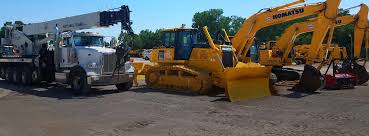
Equipment financing is a different beast entirely. It’s a loan or lease specifically used to purchase a hard asset. This could be anything from a delivery truck or a CNC machine to medical equipment or office computers.
The big difference here is that the equipment itself usually serves as the collateral. Because the lender has something physical they can take back if things go south, the interest rates are typically much lower than unsecured working capital loans.
When to Choose Equipment Financing:
Expanding Capacity: You’re turning down jobs because you don't have enough trucks or machines.
Replacement: Your old gear is costing more in repairs than a monthly lease payment would.
Long-Term Assets: You’re buying something that will last you 5, 10, or 15 years.
Preserving Cash: You want to keep your liquid cash in the bank for emergencies and let the equipment pay for itself over time.
If you are looking to scale your physical operations, equipment leasing is almost always the more strategic move.
The Head-to-Head Comparison
Here is a quick look at how these two options stack up against each other. Keeping these numbers in mind will help you avoid overpaying for your money.
Factor | Working Capital | Equipment Financing |
Interest Rates | 10% – 30% | 5% – 15% |
Loan Term | 12 – 24 months | 3 – 7 years (sometimes up to 12) |
Collateral | Often unsecured or based on revenue | The equipment itself |
Speed of Funding | Very Fast (often 24-48 hours) | Moderate (requires equipment quotes) |
Use of Funds | Extremely Flexible | Restricted to the specific asset |

Matching the Term to the Asset: The Golden Rule
If there is one thing you take away from this post, let it be this: Always match the length of your loan to the life of what you’re buying.
We see business owners make this mistake all the time. They use a high-interest, short-term working capital loan to buy a $50,000 piece of equipment. Because the loan has to be paid back in 12 months, the monthly payments are astronomical. It suffocates their cash flow, and suddenly they can't afford payroll because all their money is going toward a machine that will last them 10 years anyway.
Conversely, don't take out a 5-year loan to pay for a 3-month marketing campaign. You’ll still be paying for those Google Ads long after the customers have come and gone.
The Canadian Context: Tax Benefits & CSBFL
As a Canadian business owner, you have some unique advantages.
Capital Cost Allowance (CCA): When you finance equipment, you can often write off the depreciation against your business income. This can significantly lower your tax bill at the end of the year.
Section 179 Considerations: While often discussed in a US context, many Canadian provinces have similar incentives for immediate equipment write-offs.
CSBFL Loans: The Canada Small Business Financing Program is a government-backed initiative that makes it easier for small businesses to get loans for equipment or leasehold improvements.
Working with a broker who understands the Canadian lending landscape is essential to making sure you aren't leaving money on the table.
Common Pitfalls to Avoid
Even the smartest CEOs can trip up when they're moving fast. Here’s what to watch out for:
Ignoring the "Total Cost of Capital": Don't just look at the monthly payment. Look at what the loan costs you over the entire term. Working capital is "expensive" money, so use it sparingly and strategically.
Over-Leveraging: It’s easy to get approved for more than you need. Just because you can get $100k doesn't mean you should take it if $50k solves the problem.
Failing to Plan for Seasonal Dips: If you take on a fixed monthly payment for equipment, make sure you can still make that payment during your slowest month of the year.
Waiting Until You're Desperate: It’s much easier to get a fast business loan approval when your bank account still has a healthy cushion. If you wait until you're at zero, lenders get nervous.
How to Decide: A Quick Diagnostic
Still not sure which way to go? Ask yourself these three questions:
Does the thing I'm buying have a serial number? If yes, look at equipment financing first.
How long will this investment take to pay for itself? If it’s under a year, working capital is fine. If it’s years, go with equipment financing.
Is my problem a "lack of tools" or a "timing gap"? If you have the work but lack the tools, finance the gear. If you have the tools but are waiting for a check to clear, get working capital.
Why FINANC1FYD Makes the Difference
At FINANC1FYD, we don't believe in one-size-fits-all. We know that a trucking company in Ontario has very different needs than a tech startup in Vancouver.
Our goal is to be your partner in growth. We offer straightforward advice and help you navigate the complexities of business funding solutions. Whether you need an unsecured revenue-based loan to bridge a gap or a low-rate lease for a new fleet of vehicles, we’ve got your back.
Growing your company shouldn't feel like a constant battle with your bank account. By choosing the right type of financing, you can protect your cash flow, maximize your tax benefits, and keep your eyes on the big picture.
Ready to see what you qualify for? Don't wait for the next cash crunch. Book a consultation with us today and let’s get your growth plan funded. Whether it’s $10,000 or $1,000,000, we’re here to help you make it happen.


Comments